Newsletter
Ypsilanti Animal Clinic Newsletter
The veterinarians and staff at the Ypsilanti Animal Clinic are pleased to provide you with an online newsletter. This fun and fact-filled newsletter is updated on a regular basis.
Included in the newsletter are articles pertaining to pet care, information on our animal hospital, as well as news on the latest trends and discoveries in veterinary medicine.
Please enjoy the newsletter!
Current Newsletter Topics
Pets and their people love being outside in the summertime - and so do mosquitoes. Because mosquitoes are the most common carriers of heartworm disease, keeping pets up to date on preventive heartworm treatments during mosquito season is especially important.
Heartworms are exactly that—large worms that live in the hearts of cats and dogs. Known as Dirofilaria Immitis, heartworms are long, spaghetti-like worms that range in size from 6 to 10 inches. Heartworms are almost always transmitted by mosquitoes. A mosquito bites an infected dog or cat; that mosquito picks up microfilariae, a microscopic version of the heartworm. When that mosquito bites your dog or cat, the heartworm microfilariae are transmitted to him / her. Within 70 to 90 days, the microfilariae make it to your pet's heart and, once mature, begin reproducing. The cycle then begins again.
Signs of heartworm disease in pets vary based on the age and species of the pet and the number of worms present. Because the worms are usually located on the right side of the heart and lung, coughing and shortness of breath are common signs in both dogs and cats. Dogs that have just acquired the disease may have no signs, while dogs with a moderate occurrence of the disease may cough and show an inability to exercise. In extreme cases, dogs may experience fainting, weight loss, fever, abdominal swelling and death. In cats, the symptoms of heartworm disease are similar to those of feline asthma, including coughing and shortness of breath. Some cats may exhibit no signs of the disease, while others may suddenly die.
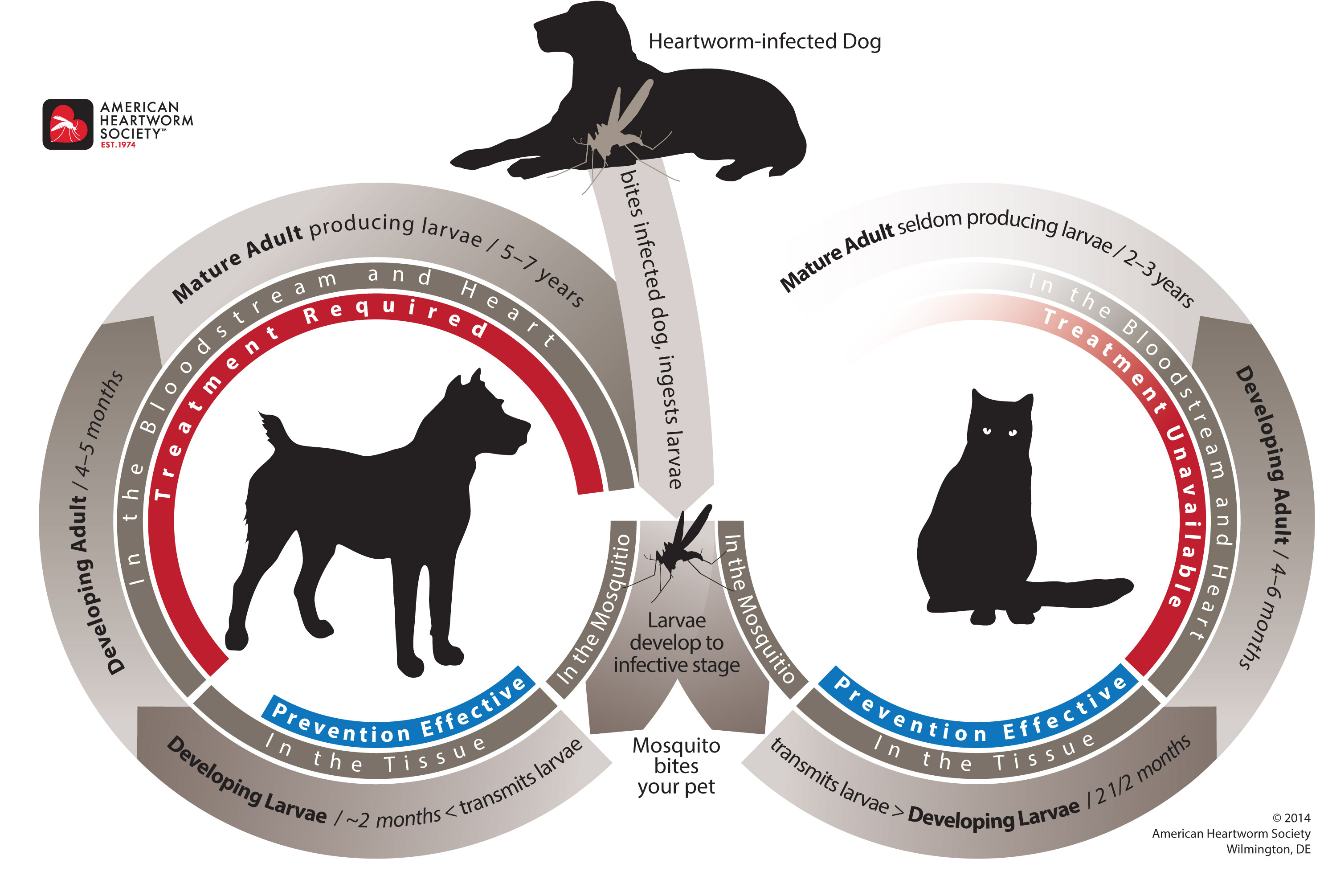
When it comes to preventing heartworm disease, pet owners have a number of options. Before beginning preventive medication, pet owners should have their pets tested for the presence of heartworms. If heartworms are present, a treatment plan should be discussed with your veterinarian. Most heartworm prevention is done by administering your pet a once-a-month heartworm preventive medication. Many of these monthly products are administered as a chew-able treat. Some are combined with other preventive medications. Your veterinarian will recommend the product that is best suited for your pet.
If you would like to have your pet tested for heartworm or you would like additional information about the disease, please contact your veterinary hospital.
Saturday, April 27 is World Veterinary Day for 2024. Started by the World Veterinary Association, World Veterinary Day was started to honor veterinarians and spread awareness of the One Health Concept, which “recognizes that the health and well-being of animals, humans and the ecosystem are interconnected, and depend on effective and sustained collaboration between human and animal-focused disciplines.”
But what does your veterinarian actually do?
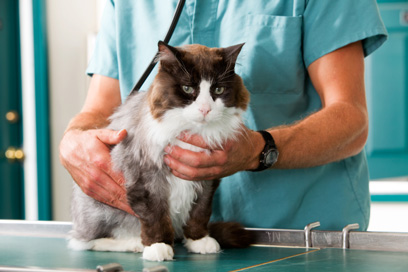
If you think veterinary medicine is about animals, you’re only partially right. Animals don’t call veterinarians. People call veterinarians. The vast range of people and places needing veterinary services include research laboratories, pharmaceutical companies, zoos, dairies, swine farms, public health departments, feed industry, livestock industry and pet owners. Veterinary medicine is a great field because it encompasses so many different areas.
Most people don’t realize how closely human medicine is linked to veterinary medicine. Lifesaving medical advances, in areas from vaccine development to heart surgery, could not have been made without the use of research animals. People may also be unaware of the public services that involve veterinarians. Government agencies from the FDA to state health departments rely on veterinarians to track rabies, foodborne illnesses and diseases transmitted from animals to people.
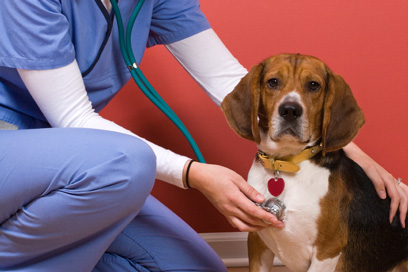
Of course, there are many benefits to working closely with animals. One of the pleasures of being a veterinarian is that people who own animals love their animals, whether the animals are horses, pigs, iguanas or puppies. You are generally dealing with people with empathy who like what they are doing. They recognize that what is best for the animal is also usually best for them.
For more information about World Veterinary Day, check out the World Veterinary Association’s website.
Veterinarians take many things into consideration before recommending humane euthanasia for a sick, injured or elderly pet. When it comes to setting your own mind at ease, there are ways to rate or measure your pet's overall well-being.
The Veterinary Medical Center at Ohio State University published a survey designed to illustrate your pet's quality of life which was adapted from several other common methods. The survey asks you, the pet owner, to rate 25 different prompts on a scale from one to five. A score of one indicates strong agreement or a condition that is present all the time or is severe; a score of five indicates strong disagreement or a condition that is never present and nonexistent. Thus, higher scores indicate a better quality of life.

The Survey
Scale
1: Strongly Agree / All the Time / Severe
2: Agree / Most of the Time / Significant
3: Neutral / Sometimes / Mild
4: Disagree / Occasionally / Slight
5: Strongly Disagree / Never / None
My pet...
1. Does not want to play
2. Does not respond to my presence or doesn't interact with me in the same way as before
3. Does not enjoy the same activities as before
4. Is hiding
5. Demeanor/behavior is not the same as it was prior to diagnosis/illness
6. Does not seem to enjoy life
7. Has more bad days than good days
8. Is sleeping more than usual
9. Seems dull and depressed
10. Seems to be or is experiencing pain
11. Is panting (even while resting)
12. Is trembling or shaking
13. Is vomiting and/or seems nauseous
14. Is not eating well (may only be eating treats or if fed by hand)
15. Is not drinking well
16. Is losing weight
17. Is having diarrhea often
18. Is not urinating well
19. Is not moving normally
20. Is not as active as normal
21. Does not move around as needed
22. Needs my help to move around normally
23. Is unable to keep self clean after soiling
24. Has coat that is greasy, matted or rough-looking
25. How is my pet's overall health compared to the initial diagnosis/illness?
Once you have rated each prompt, tally up the number of responses for each number and then place an 'X' on a "Quality of Life line" labeled "Good" at one end and "Poor" at the other according to your most frequent response.
The purpose of this exercise is to help you better visualize your pet's general well-being. Of course, not all pets are the same and what is rated poorly for one may not be so bad for another. For pets currently undergoing treatment, some poor ratings may be liked to symptoms and side effects which will subside. It is always important to discuss your concerns and your pet's overall demeanor with your veterinarian, especially when considering humane euthanasia.
Do you have a dog that can’t stop chewing or licking its own flanks? Compulsive behavior such as tail chasing, pacing, chewing, snapping at imaginary flies, or sucking on blankets affects approximately 8 percent of the dogs in the U.S. Obsessive-Compulsive disorder also affects humans and causes behaviors like excessive hand-washing, checking and rechecking door locks and even pulling one’s hair out.
In a recent study at the Cummings School of Veterinary Medicine at Tufts University, researchers compared the genetic codes of a group of Dobermans that exhibited the compulsive behaviors and a group that didn’t. The Dobermans in the compulsive group repeatedly curled up and sucked or chewed their flanks. The groups were labeled “sucking” and “nonsucking” for identification.

The dog genome was successfully mapped by this same group of researchers last year, giving a big boost to genetic studies in humans. Heart disease in Boxers was mapped to a genetic characteristic on one chromosome. Applying this information to the human genome may have saved researchers ten years in the study of heart disease in humans.
Building on this previous research, scientists searched for a genetic source for the compulsive behavior by scanning and comparing the genomes of 94 Doberman pinschers that sucked their flanks with those of 73 Dobermans that did not. The researchers found variations in the genetic code on chromosome 7, specifically in a gene called Cadherin 2, when the sucking and nonsucking dogs were compared. Knowing the location of the gene that caused the compulsive behavior allows further research into specific proteins that may be involved in the development of this disorder.
The results, says Dr. Nicholas Dodman, director of the animal behavior clinic at the Cummings School of Veterinary Medicine at Tufts, have implications for both humans and dogs. Using this new information, the genetic defect might now be mapped in the human genome. This means we may be able to find the genetic cause of obsessive-compulsive disorder, and possibly other disorders -- such as autism -- which are closely related.
Since the mapping of the Boxer’s genome, researchers have rushed to see what implications the new information has for human medicine, as the painstaking process of mapping the human genome continues. The information gained from the dog genome has allowed researchers to take shortcuts in investigating genetically caused disorders in humans. It seems the Doberman and the Boxer have helped advance human medicine by leaps and bounds.

Is the rental market improving or getting worse for tenants with pets? Some say better, others disagree and scream worse...unfair!
According to a study released in 1999 by the National Council on Pet Population, moving was identified as the major reason for giving up a pet dog and the third most common reason for giving up a pet cat. Moving in itself was not the reason for giving up the pet; it was the landlord's refusal to accept pets in the new apartment or house.
Certain regions of the country are more difficult for renters who have pets. According to a study, renting with pets is most difficult in the Northeast and in California. The area of the country where it is easiest to rent with pets appears to be in the Southeast. The situation in Atlanta is a prime example of why it is so difficult for some pet owners. With only 2500 apartment complexes in the metropolitan area, only about 10 percent take dogs weighing more than 35 pounds. In the metropolitan New York area (including Long Island and New Jersey), it is very difficult for a new renter to find lodging where pets are allowed.
As frustrating as it appears, there are methods to sway owners with firm "no pets" policies.
- Make sure your pet is well behaved. Toilet training is a must and personality problems, such as separation anxiety, must be addressed.
- Adoption of a pet-friendly contract with set rules:
- Spay or neuter requirements
- Obligatory License
- Current with vaccinations
- Leash policy
- Designated toilet area
- Scoop-up regulations
- Supplemental pet security deposit
- Pet committee to oversee the program

The Humane Society of the United States' website offers a "Renting with Pets" section.
In the San Francisco area, pet owners can purchase a revolutionary new insurance policy. This policy protects landlords against pet-related damages. www.LeasesWithPets.com sell policies for about $200/year that cover up to $5000 worth of damage.
If you already own a pet and your landlord is trying to evict you, consult an attorney that has some knowledge in landlord-tenant law as well as in animal law. Many cities and towns have laws that prohibit eviction of a tenant who owns a pet.
For more information about renting with pets, the following websites are worth visiting:
www.hsus.org - Humane Society of the US
www.mspca.org
www.sfspca.org
www.apartments.com - Includes pets as a search criteria
Most of the information for this article comes from the ASPCA. You can visit their website at www.aspca.org.